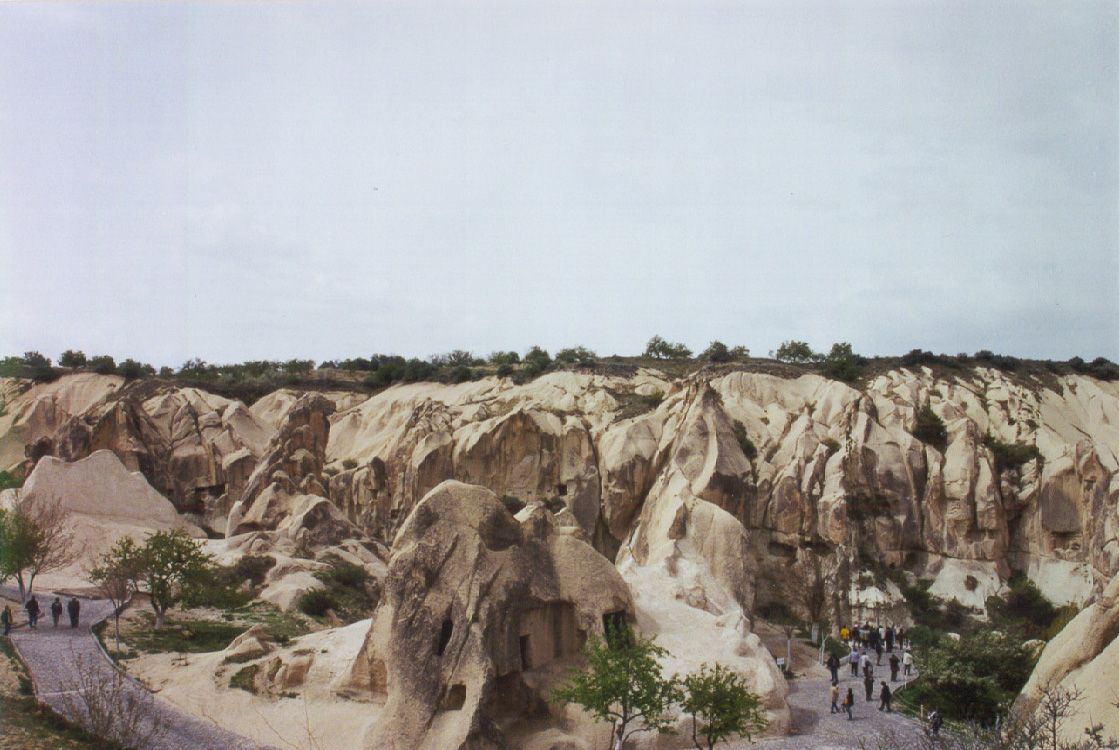
Cappadocia has one of the most interesting and spectacular landscapes in the world. About three million years ago the volcanoes of Mt. Erciyes and Mt. Hasan covered the surrounding plateau with volcanic tuff as a result of their violent eruptions. The natural effects of wind, water and rain eroded this area into a spectacular, surrealist landscape of rock caves, capped pinnacles and fretted ravines in colors ranging from warm tones of red and gold to cool tones of green and gray.
Dating back to 4000 BC; the earliest people used to live in Goreme, known as Cappadocia, in dwellings dug into the rock. Christianity came to the region, and chapels, churches and monasteries were constructed in the rocks.
We took an early morning flight (8:20am) from Istanbul to Kayceri, where we picked up our rental car. From here we drove around 1.5 hours to Ortahisar, where are hotel was situated. On the way to Ortahisar, we stopped at the Goreme Open Air Museum, Pasabag, and Zelve. The following morning we drove to see the underground cities of Derinkuyu and Kaymakli.
Goreme
The Goreme Open Air Museum, is a monastic complex of rock churches and chapels decorated with frescoes. The churches of Elmali, St. Basil, St. Barbara, Yilanli, Karanlik, Carikli, and Tokali are of particular interest and their frescoes are very well preserved. Many pilgrims still visit the churches.
A view of the Goreme open air museum from one of the dwellings above ground.
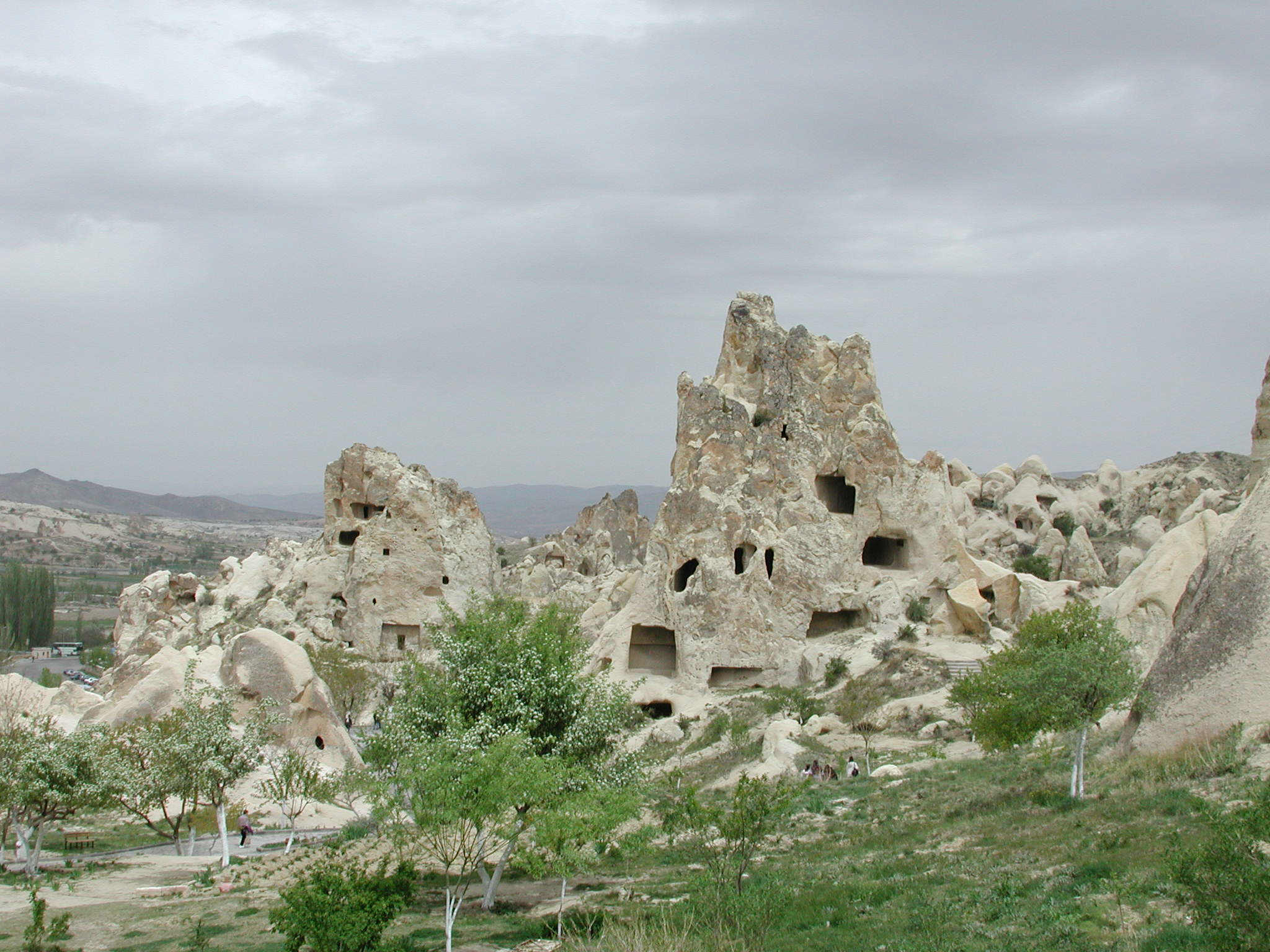
Goreme open air museum.
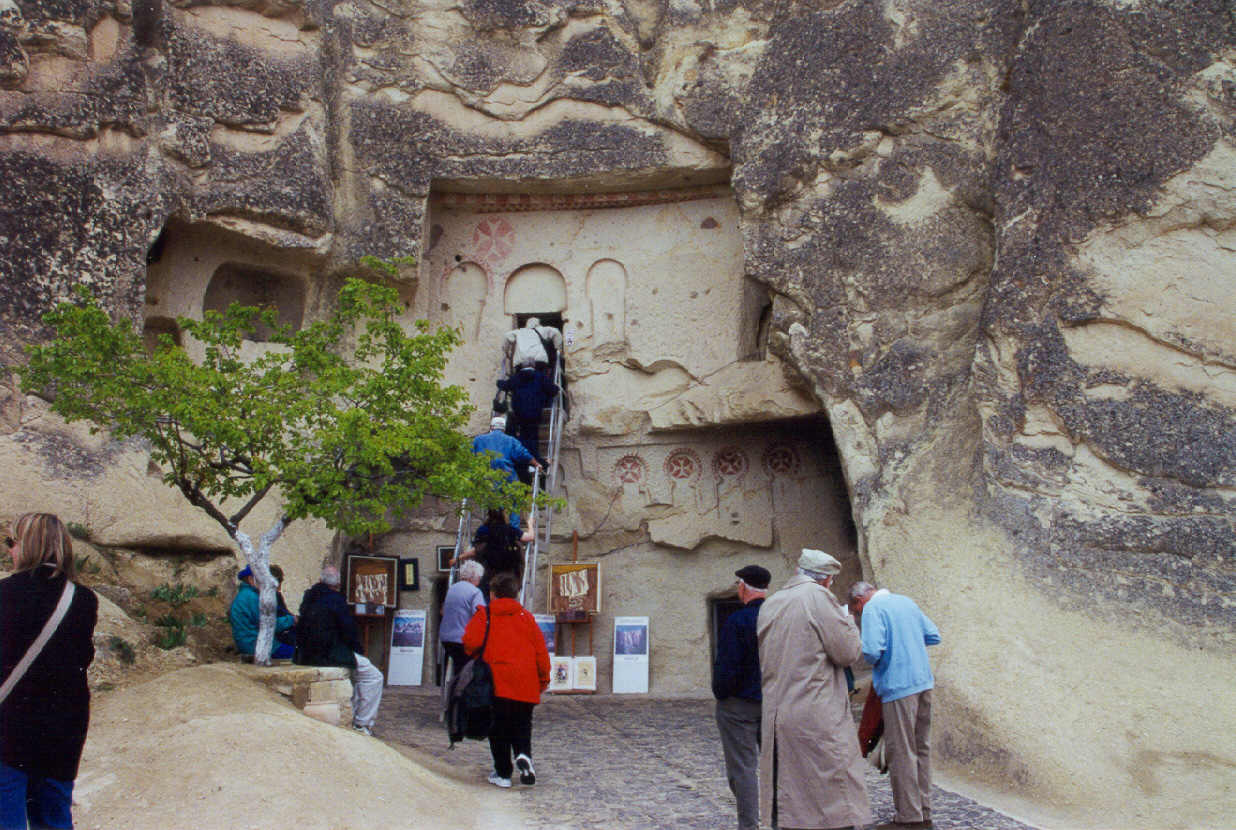
One of the Churches is accessible only by ladder. Inside the ceiling and walls are painted with Frescos.
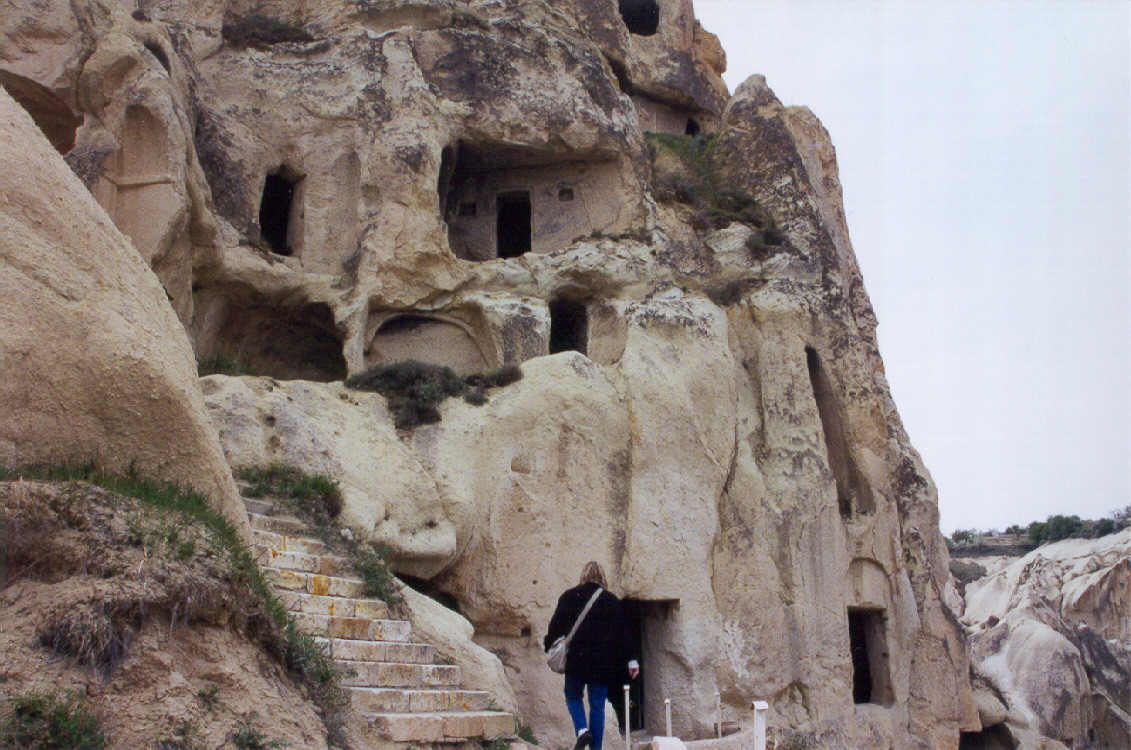
Sheila getting ready to walk up the stairs into one of the Goreme dwellings.
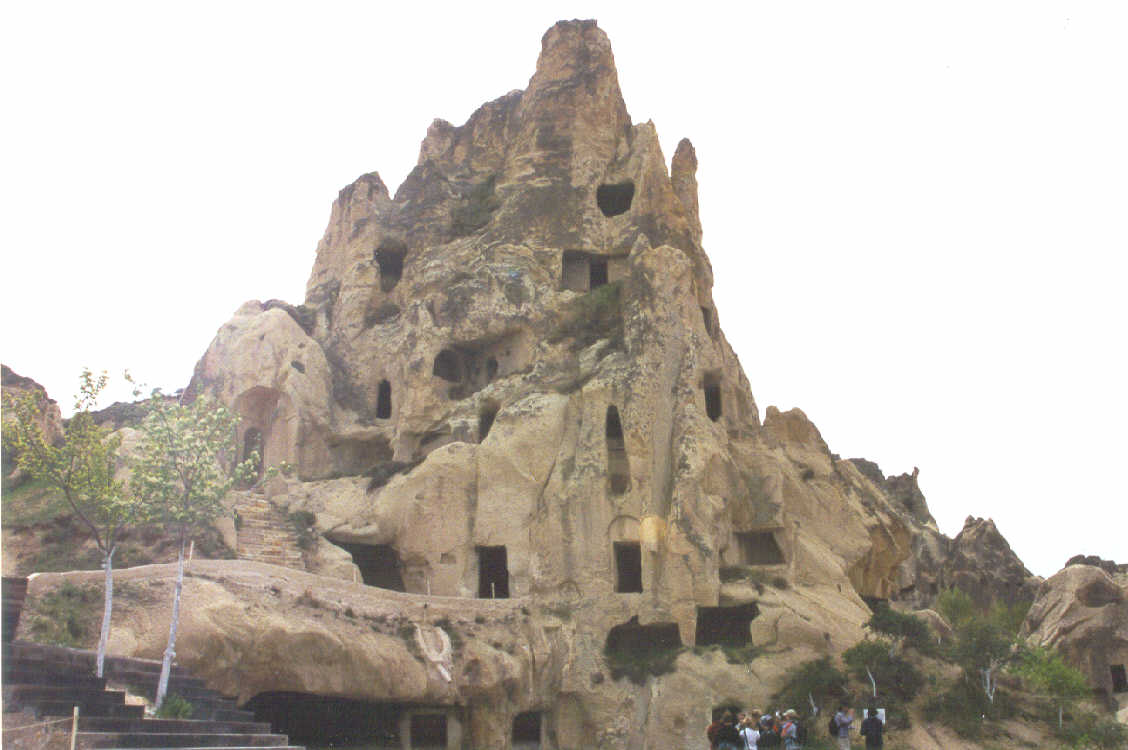
Goreme, Open air museum.

Goreme, Open air museum.

Goreme, Open air museum
