Haghia Sophia
Haghia Sophia, known to the Turks as Aya Sofya and literally
translated as "Church of Divine Wisdoms", is generally considered the
finest extant example of Byzantine architecture in the world, although many of
its interior columns were pilfered from pre-Christian temples. Consecrated in
537, its vast dome rises to 56m (183ft), designed to represent heaven and
seemingly suspended in space. Two other churches were built on the spot but were
destroyed, and Haghia Sophia remains a testament to the vision of Emperor
Justinian and the sixth-century Greek mathematicians who were able to apply the
latest developments in geometry to architecture. So impressed was Mehmet the
Conqueror that when he took the city in 1453 he dedicated it as a mosque to
Allah and it remained so until declared a museum at the founding of the secular
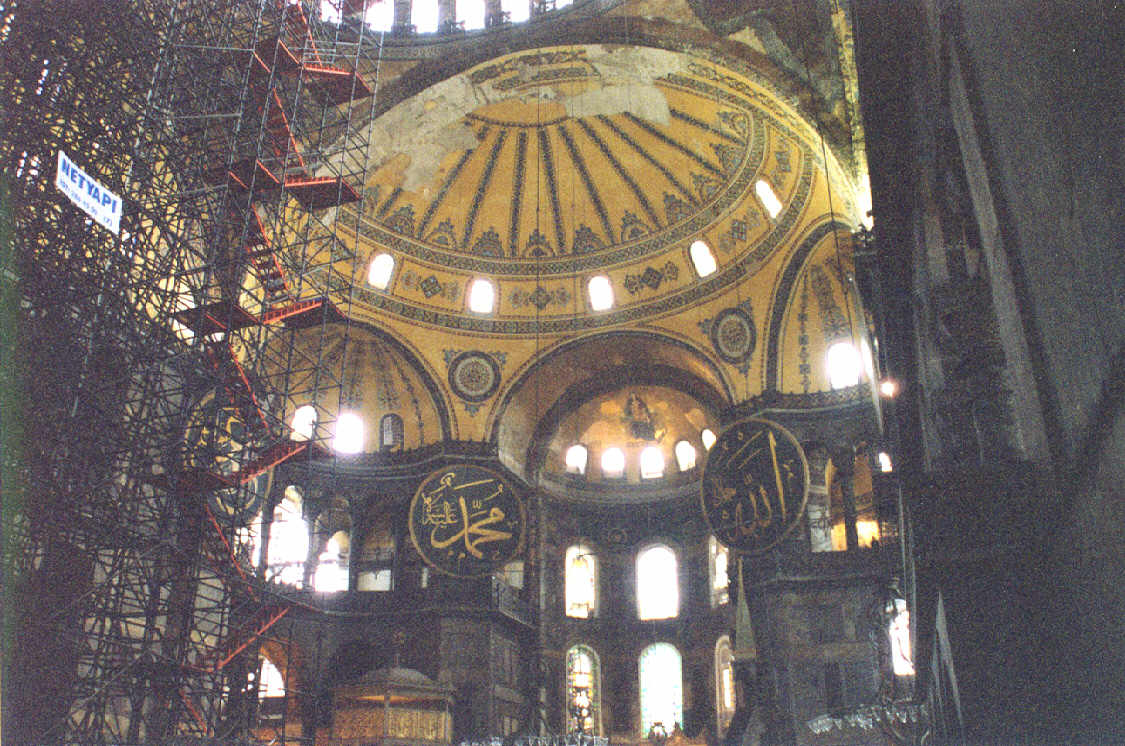
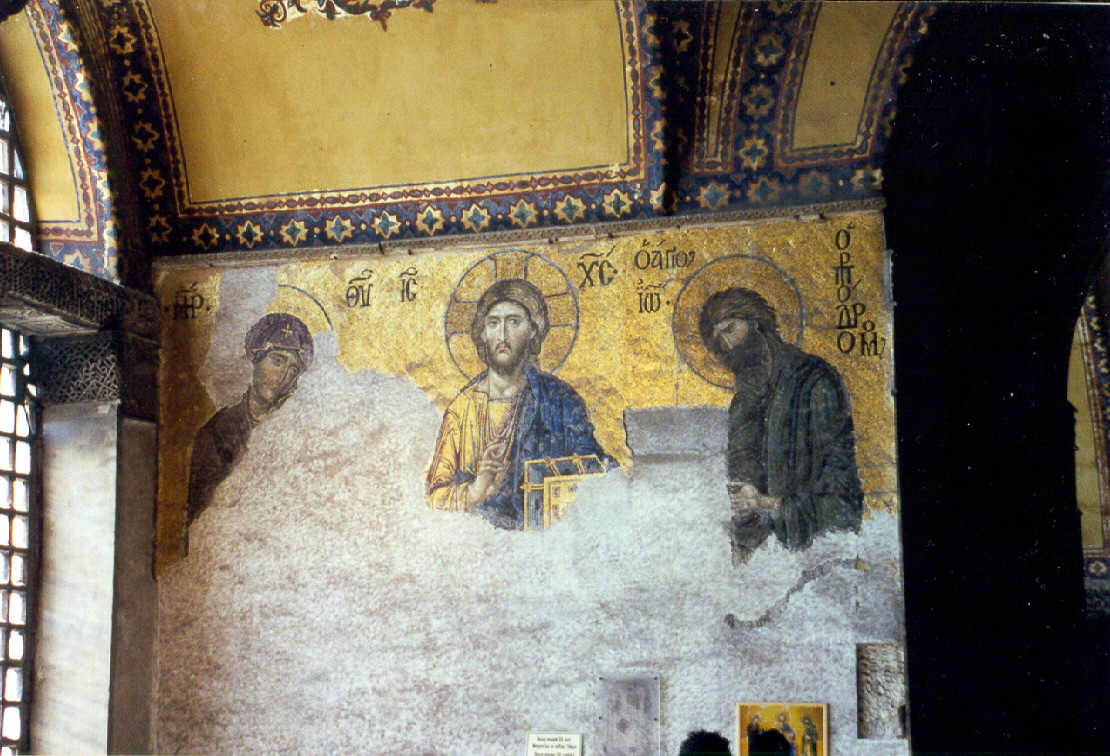
Turkish Republic. Fortunately, many of the late Byzantine mosaics remain as do
the huge circular shields from the Ottoman period containing calligraphy of
Koranic verses.
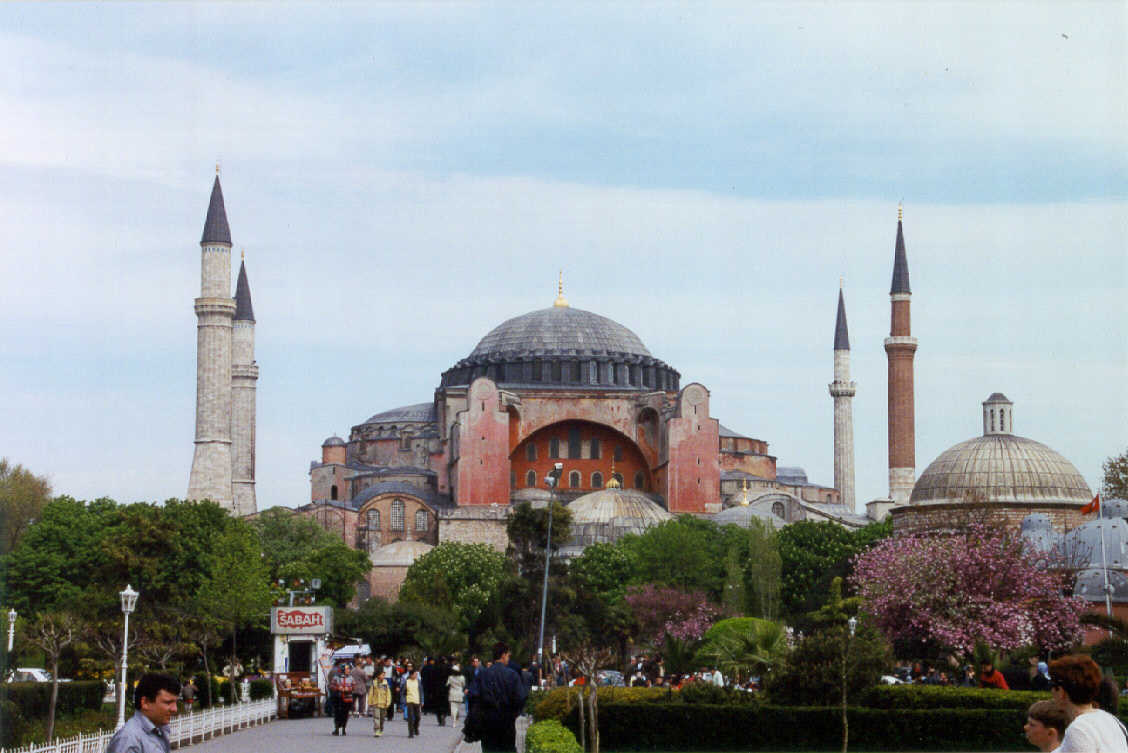
A view of Aya Sofya as we walked from the Blue Mosque.
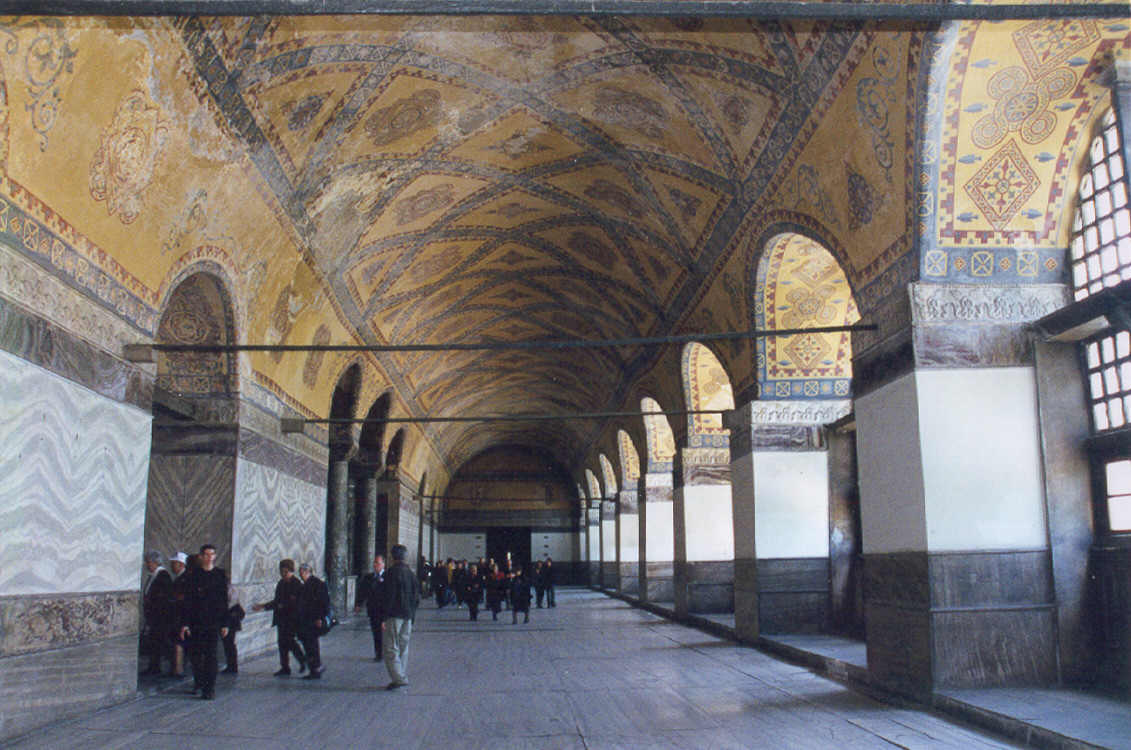
A second floor hallway in Aya Sofya. To get to the 2nd floor, you had to walk up a switch-back stone walkway from the first floor.
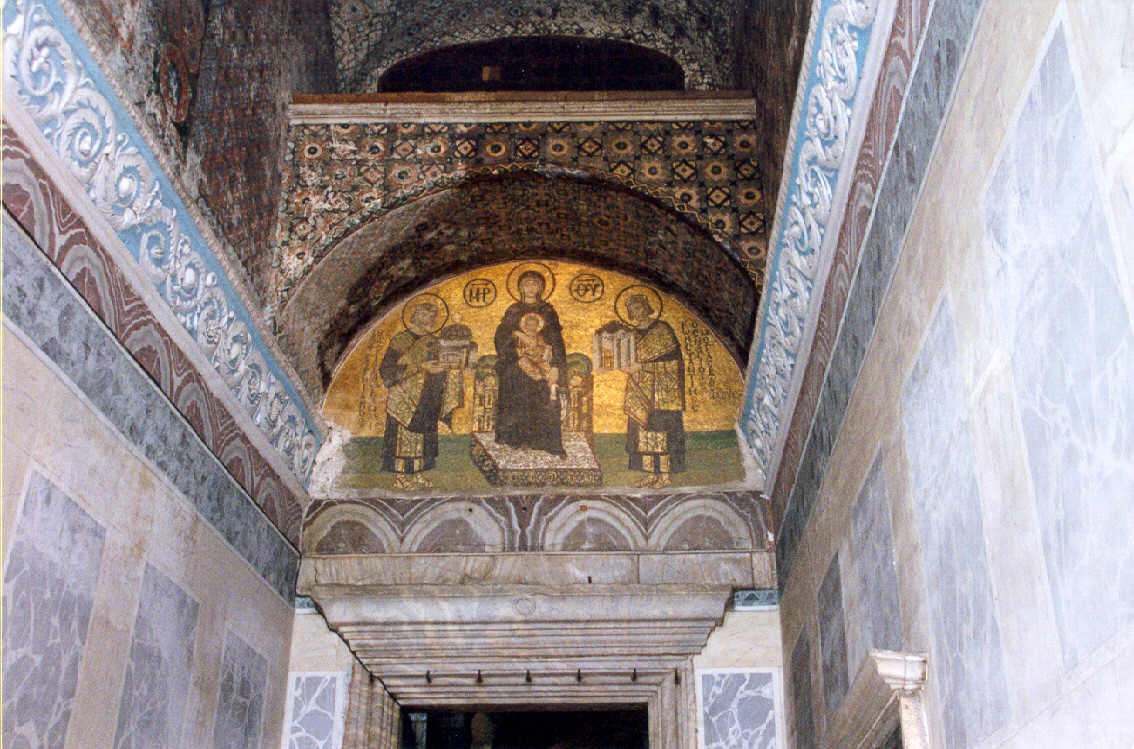
Exiting Aya Sofya, this painting was made entirely of mosaic tile.
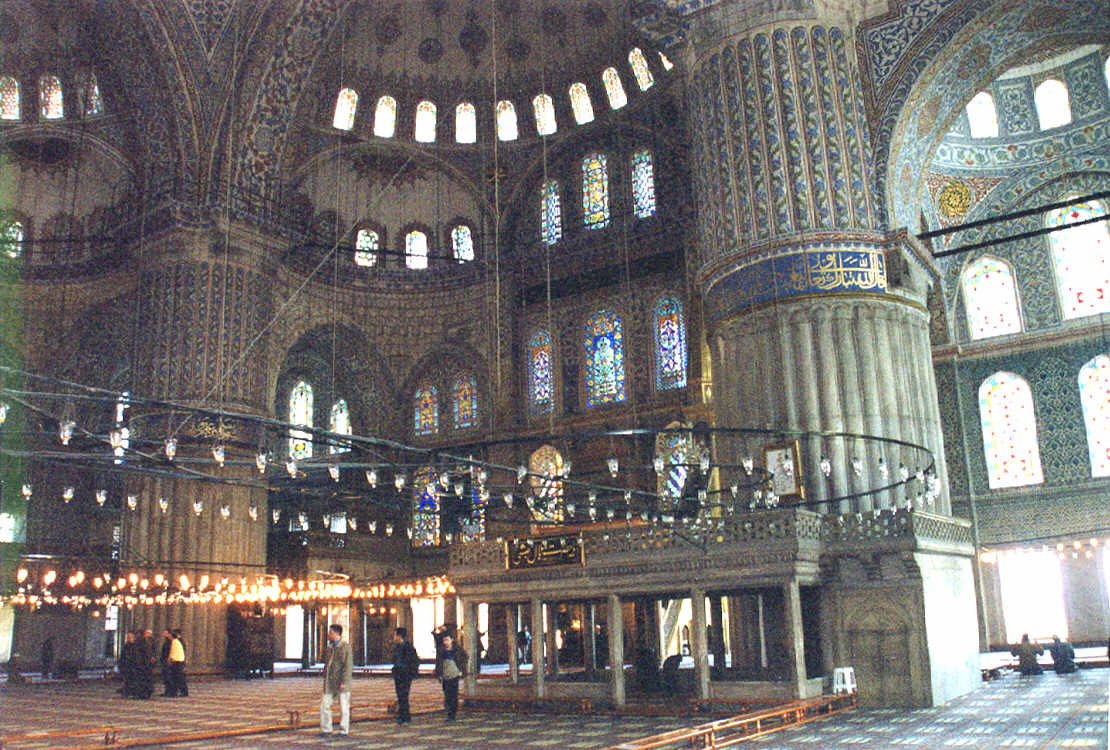
The main room above and below in Aya Sofya. The top picture contains a huge light fixture, while the bottom picture shows the scaffolding structure used during the restoration.