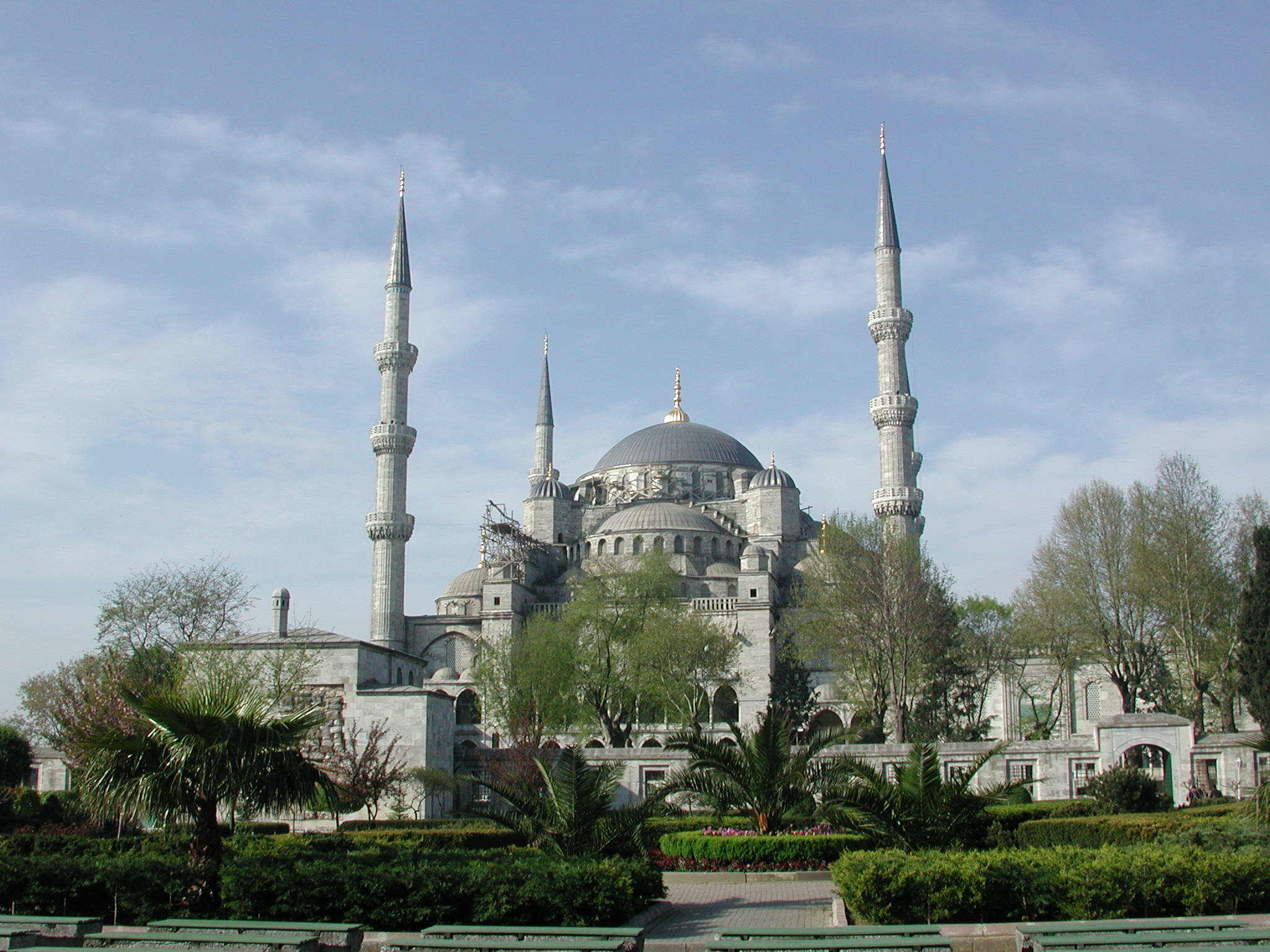
Sultanahmet Camii (Blue Mosque)
The Blue Mosque was built during the reign of the young Sultan Ahmet
(1603-1617) as Islam's answer to Haghia Sophia, and to this day it is the symbol
and centre of religious demonstrations. It takes the name blues from the
quantity of Iznik tiles that dominate the interior, giving a cooling effect, and
the light that shines through more than 250 windows. From the small dome at the
entrance gate to the vast central dome (43m/14ft high, 23.5m/77ft in diameter),
architect Mehmet Aga's intention was to lift all eyes heavenward, even from a
distance. The Imperial Loge is covered with fine latticework and the mihrab (prayer
niche) contains a piece of sacred black stone from the Ka'aba in Mecca. During
the summer months, there is a Son et Lumiere at dusk. The Imperial
Pavilion also contains a state-run carpet museum with U'ak, Bergama and
Konya samples, dating from the sixteenth to the nineteenth century.
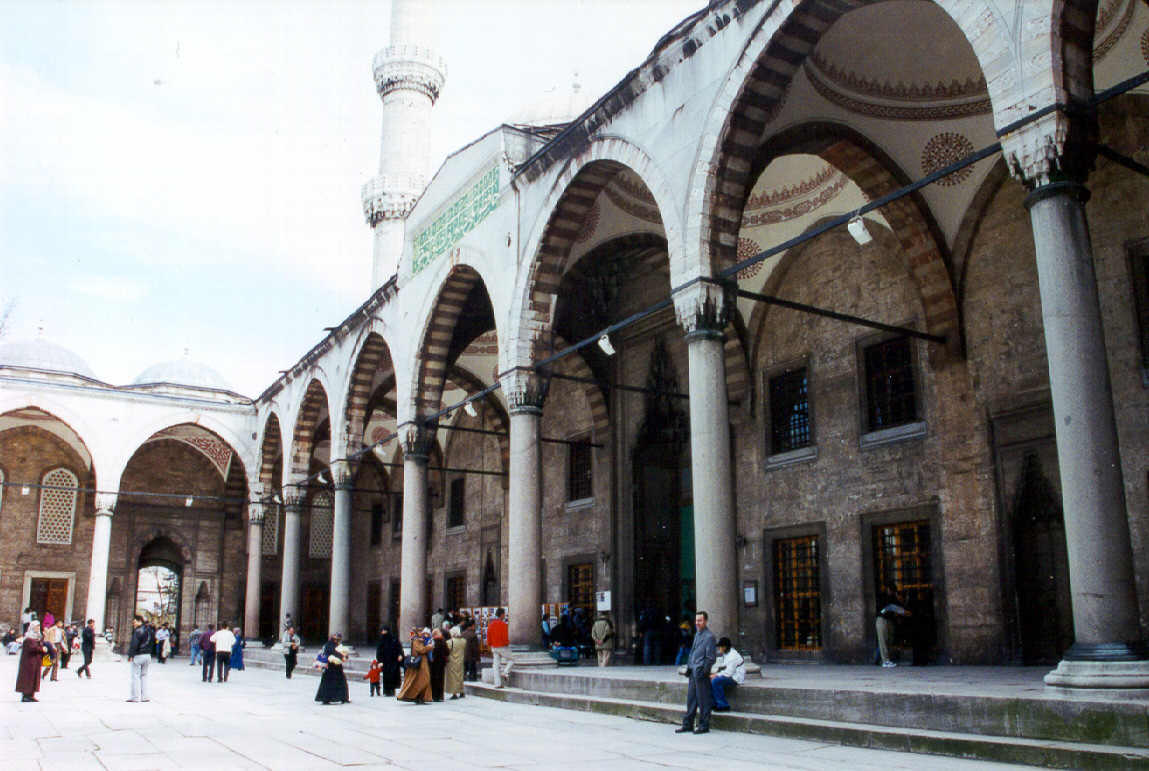
The Blue Mosque above and the courtyard of the Blue Mosque below. The main entrance is in the center of the picture below. Tourists hand to go around the side to enter and had to take their shoes off. You could not enter when prayers were in session. This is still a working Mosque.
Hippodrome
During the Byzantine period, the hippodrome was the scene of horse-racing. The hippodrome first built by Septimus Severus, and enlarged by Constantinus. The hippodrome, which was 118 m. wide and 370 m. long, had high walls. It had a capacity of 100.000 spectators, and had entrances through both of the long walls and also the Antiochus Portal, below the Emperor’s Loggia. Forty rows of seats supported by arcades lined the arena.
Two obelisks facing one another are still to be seen in Sultanahmet square.
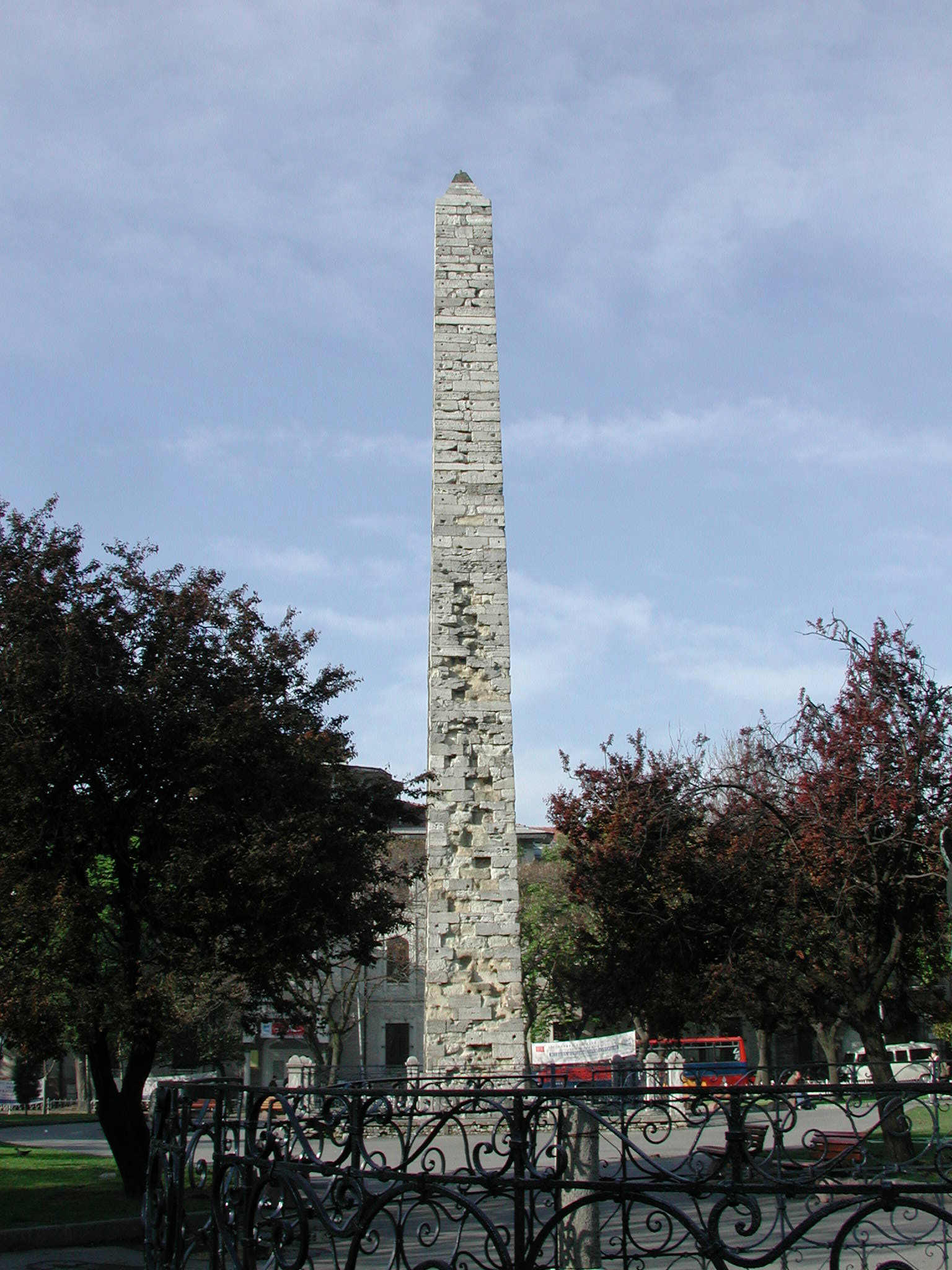
Constantine's Column: The column of Çemberlitas, was situated in the old Forum of Constantine the Great. This column, which is 57 m. in height, was brought from the Apollo Temple in Rome and set up here. It is believed that originally a statue of Apollo greeting the dawn surmounted it, which was replaced by Constantine the Great in 330 with a statue of himself.
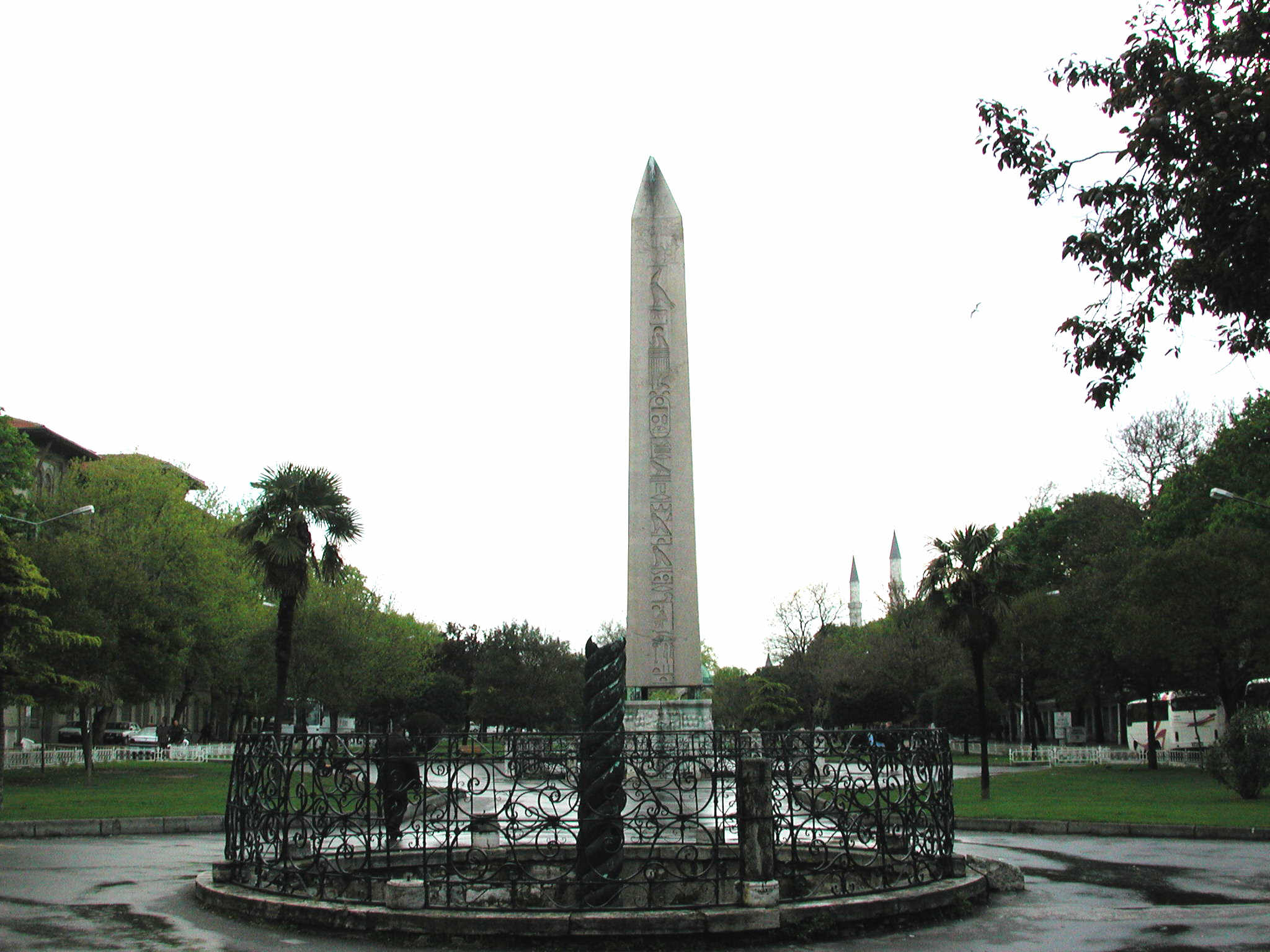
One column, which is inscribed with Egyptian hieroglyphics was brought to Istanbul from Egypt by the Emperor Theodosius, and set up in its present position in the hippodrome. It was given the name the column of Theodosius, and is 18.45 m. in height, 24.87 m. including the base. It is constructed of Syenite porphyry, weighing 200 tons, which is supported on a marble plinth measuring 2.75 x 2.20 m.