Topkapý Palace
Mehmet the Conqueror originally built Topkapý Palace over the acropolis of
pre-Christian Byzantium, as a summer residence and the seat of government. It
was his great-grandson, Süleyman the Magnificent, who decided to consolidate
home, harem, state administration and military personnel at Topkapý in the
sixteenth century. In keeping with the Ottomansý nomadic Central Asian origins,
the complex looks more like a walled city of tent-like pavilions than a royal
fortress, but at its height Topkapý spread over the whole of Seraglio Point to
the Golden Horn and the Sea of Marmara and had 3000 residents.
Sultans abandoned it for the more European Dolmabahçe Palace in 1855, but the
sumptuous jewels of the original treasury (which include the Topkaý Dagger, the
86-carat Spoonmaker's Diamond and gold-plated throne of Murat III), the armoury,
the display of silk ceremonial robes, the collection of both Chinese and Iznik
ceramics, holy relics including a mantle once worn by the Prophet Mohammed, and
the collection of manuscripts and miniatures, all convey the extent of the
Ottomon lifestyle at its peak. The Harem, which once housed up to 300
concubines, can only be visited by guided tour and requires a separate ticket
purchased inside the complex.
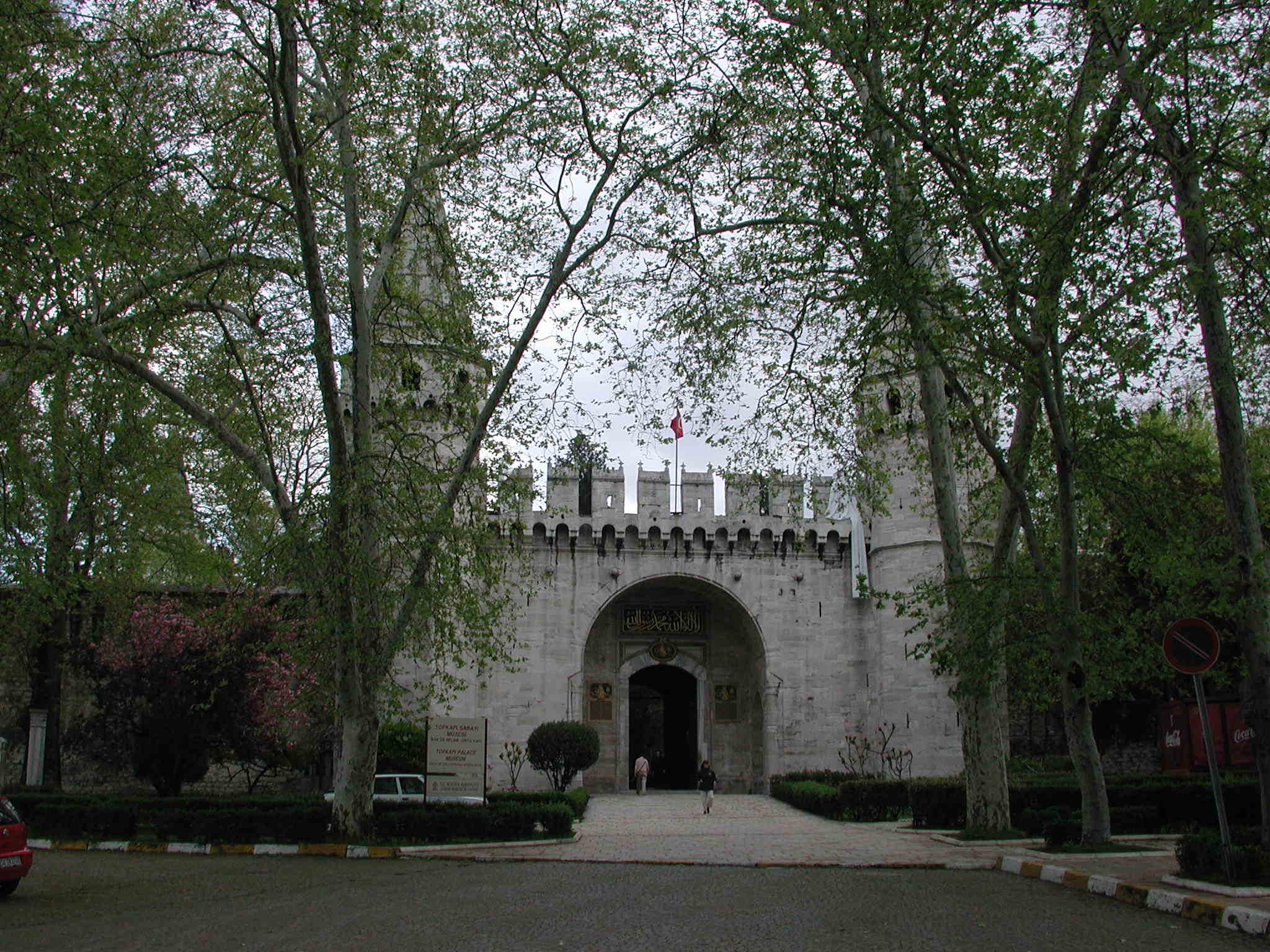
The entrance to Topkapi above.
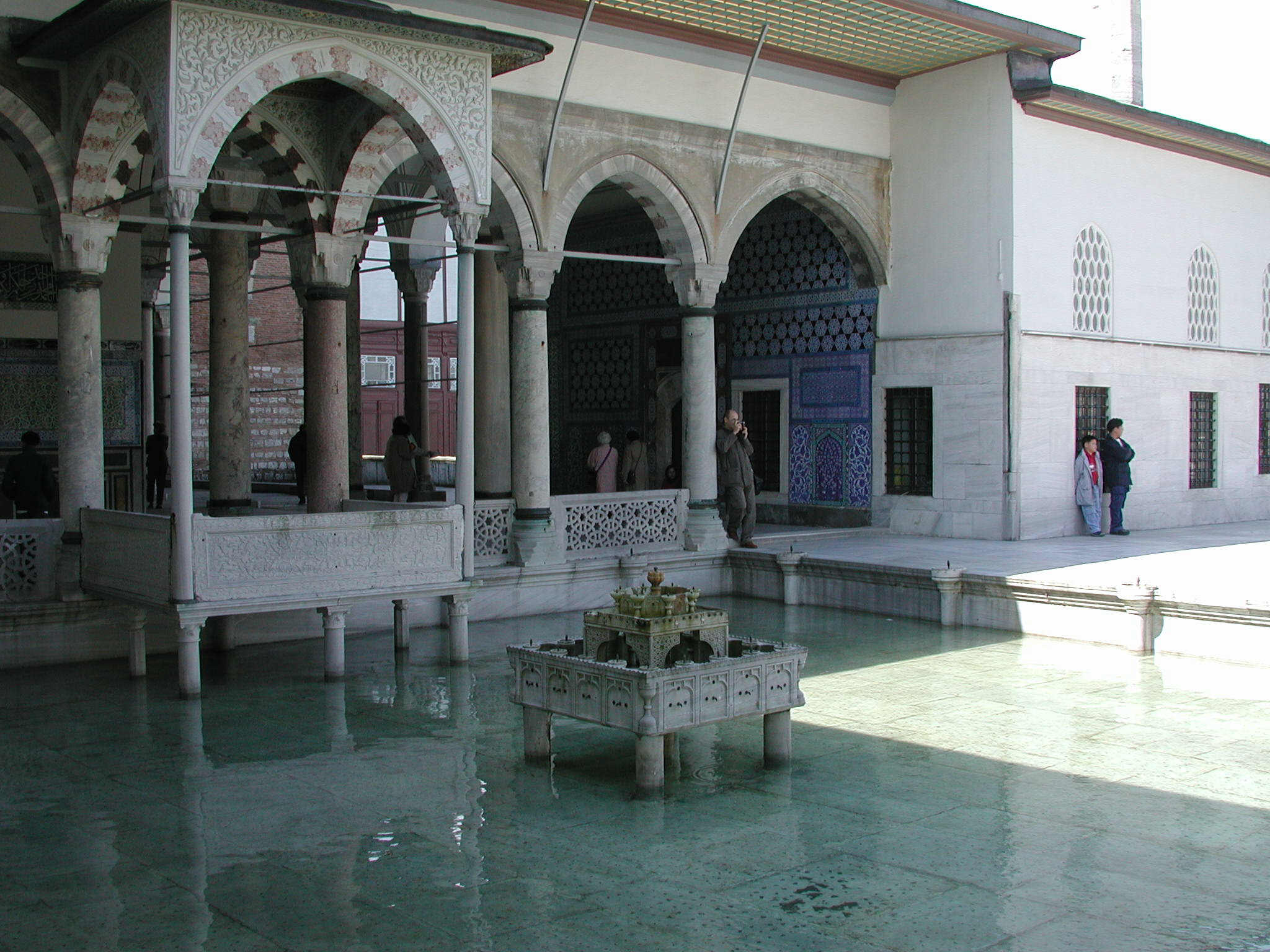
A courtyard in front of where they would perform circumcisions.
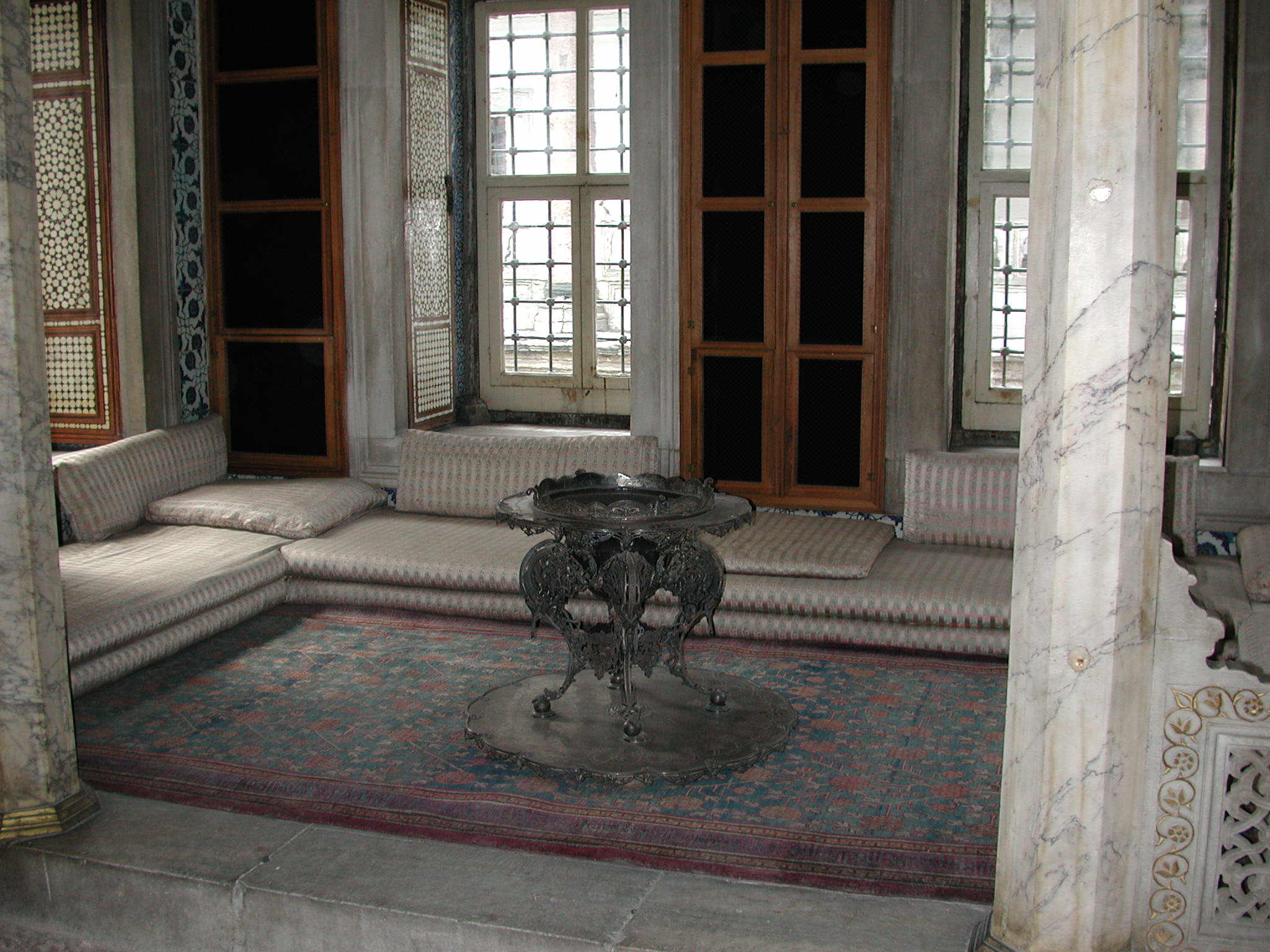
A sitting area in the Sultans library.
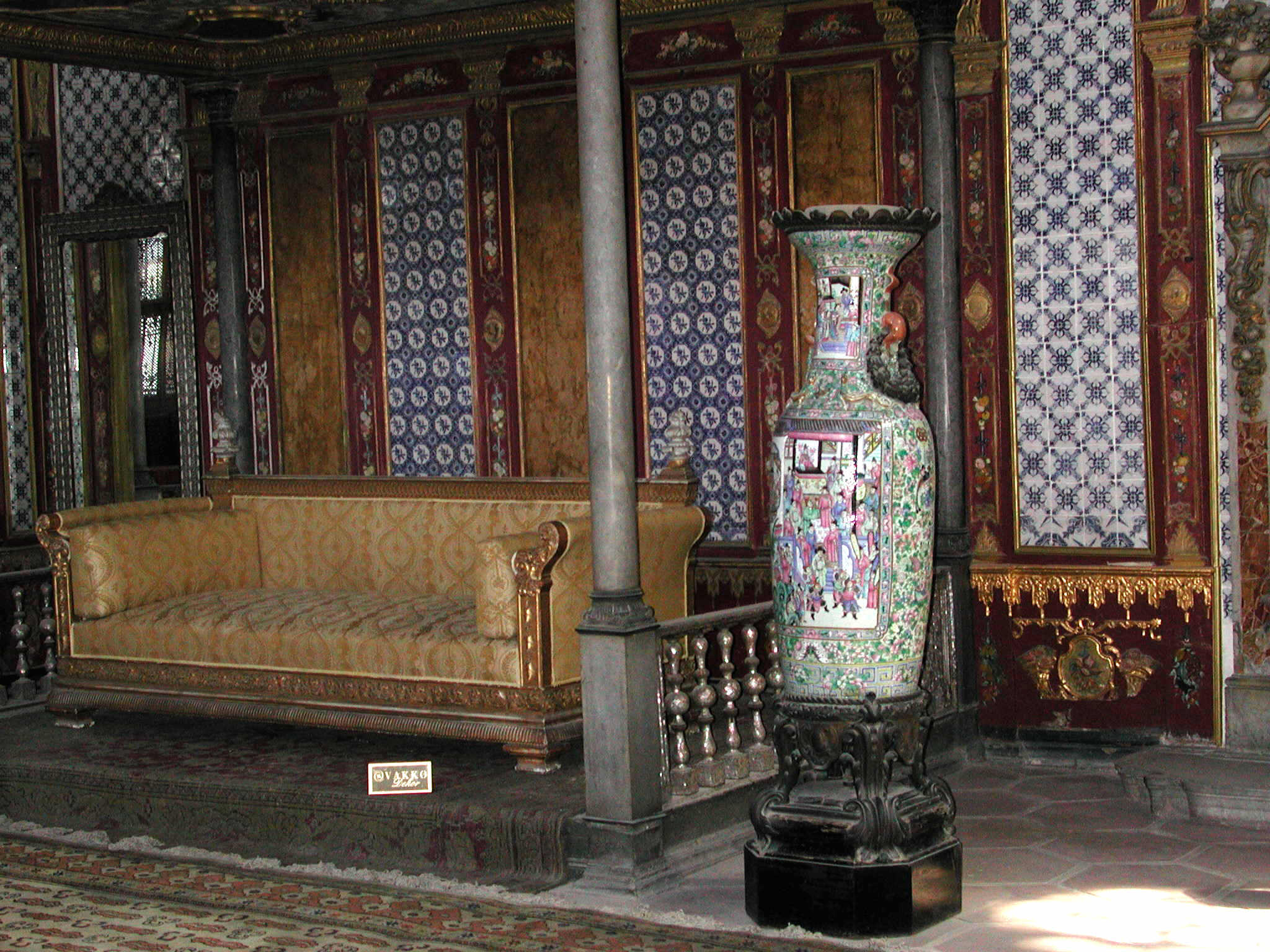
A reception room in the Harem section of Topkapi.
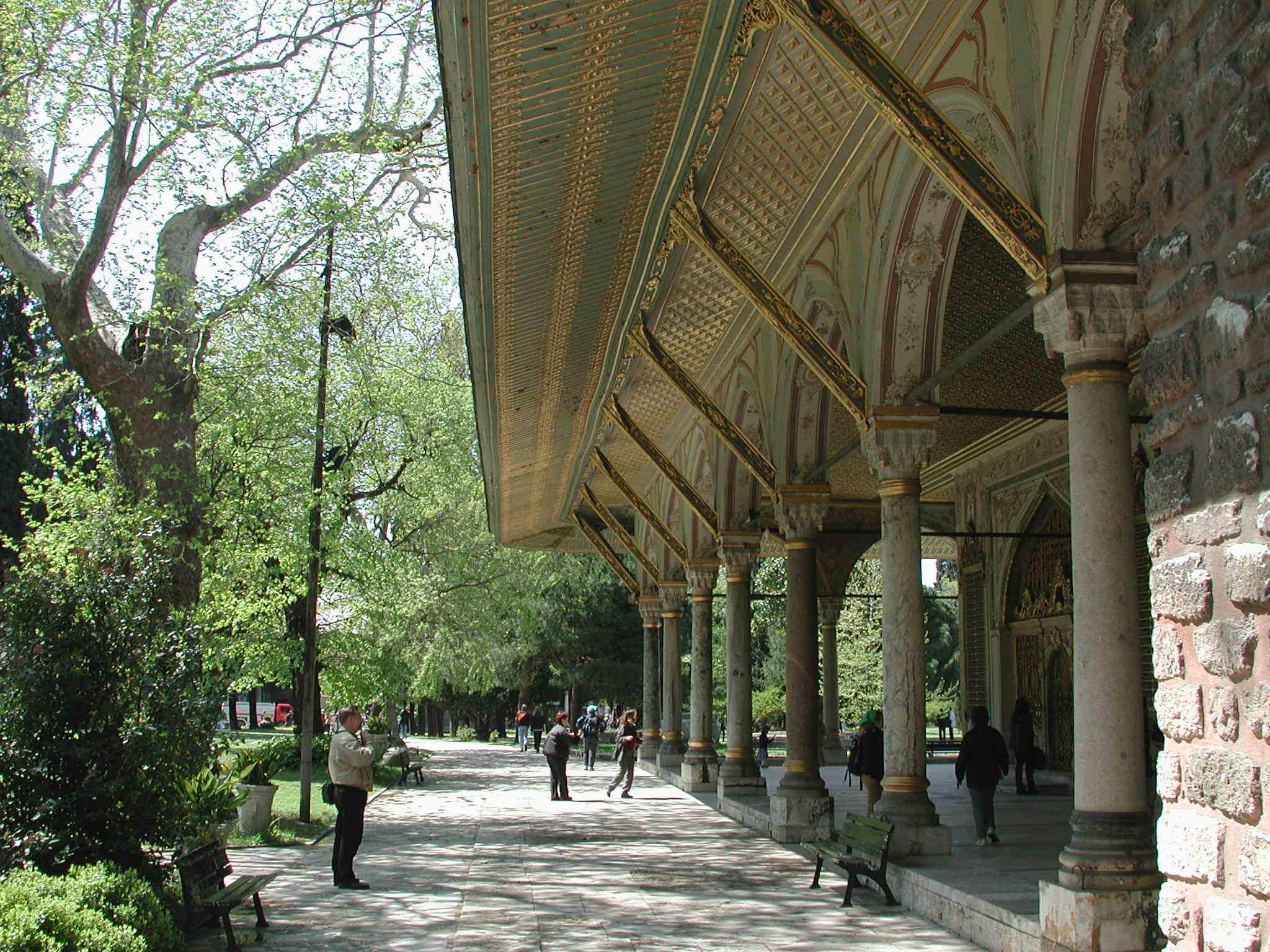
This building was used by all the officials to conduct government business. The sultan had a window that he could use to oversee what was going on in this building.
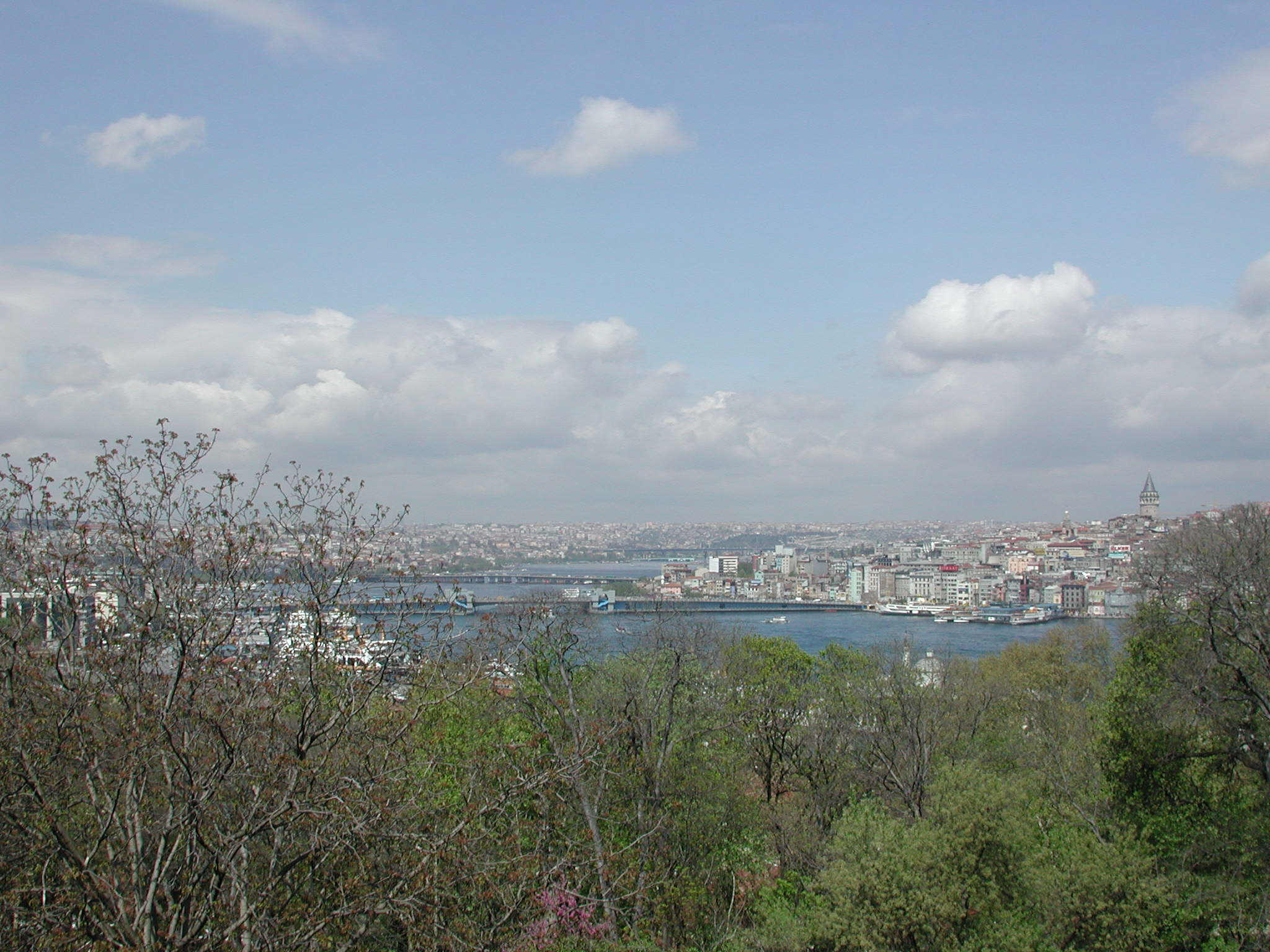
A view of the Bosphorus from Topkapi.
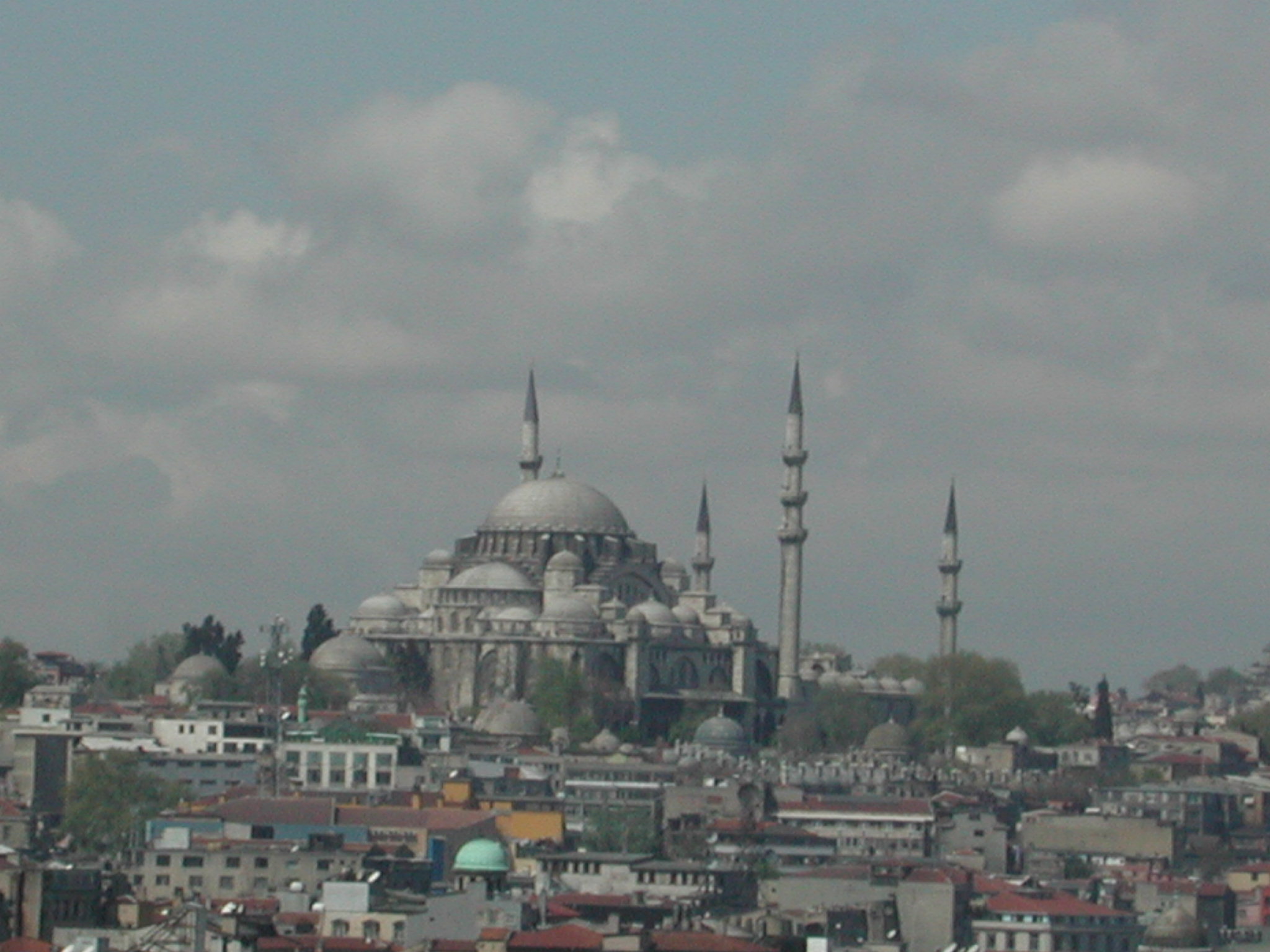
From Topkapi palace, a view of a Mosque across the Bosphorus to the new section of Istanbul.